
You May Also Like to Read


Stay Sun-Safe: Understanding UV Radiation & Sun Protection
July is UV Radiation Awareness Month. Understanding how the sun affects your skin—and how to protect it—is the best way to prevent skin damage and skin cancer.
What is UV Radiation?
Ultraviolet (UV) radiation is a form of energy emitted by the sun. While you can’t see or feel it, it penetrates your skin. There are three types of UV rays:
UVA Rays: These make up most of the UV light reaching the Earth. They penetrate deep into the skin, causing premature aging and long-term damage.
UVB Rays: These are mostly absorbed by the Earth’s atmosphere, but the rays that get through cause sunburns and play a major role in skin cancer.
UVC Rays: These are completely absorbed by the Earth’s atmosphere and do not reach our skin from sunlight.
The Bottom Line: Major health organizations, including the WHO and the FDA, have officially classified UV radiation (from both the sun and indoor tanning beds) as a known cause of cancer.
Decoding the UV Index
The UV Index is a daily forecast that tells you the expected risk of overexposure to the sun on a scale from 1 to 11+.
Low (1–2): Safe to be outside, but wear sunglasses if it’s bright.
Moderate to High (3–7): Protection is needed. Seek shade during midday, wear a hat, and use sunscreen.
Very High to Extreme (8–11+): Extra protection needed. Try to avoid the sun between 10 AM and 4 PM, and reapply sunscreen frequently.
Simple Ways to Protect Yourself
Seek Shade: Especially during midday hours (10 AM to 4 PM) when the sun is strongest.
Smart Clothing Choices: Wear long-sleeved shirts and pants.
Tip: If you can see light through a fabric, UV rays can get through it, too. Opt for dark colors and tightly woven, dry fabrics for the best protection.
Wear a Wide-Brimmed Hat: This protects your face, ears, and the back of your neck.
Put on Sunglasses: Choose pairs that specifically block UV rays to protect your eyes and the delicate skin around them.
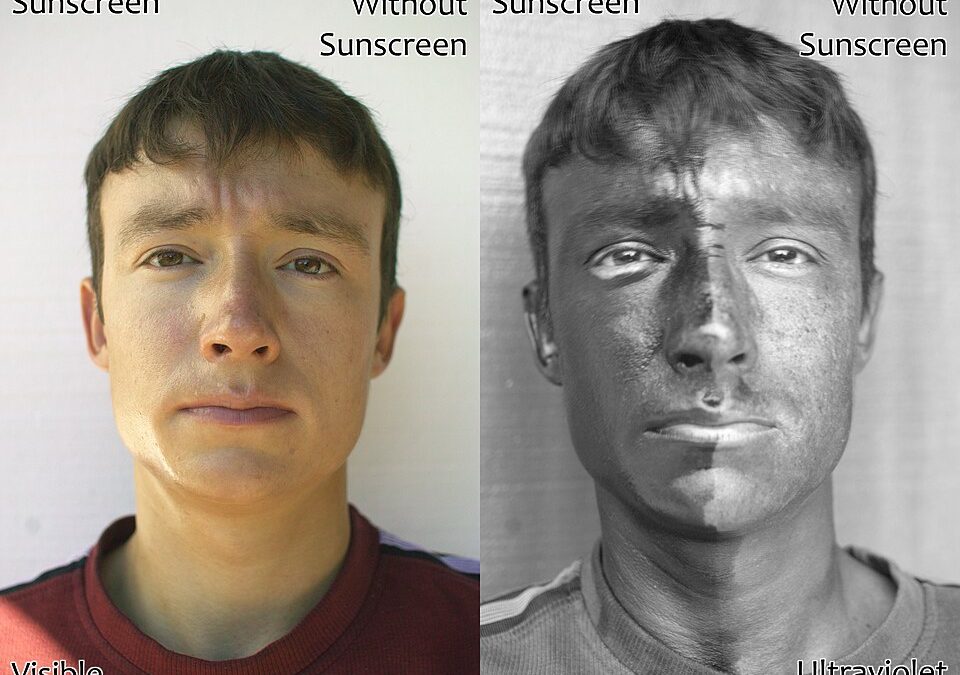
Apply Sunscreen: Use a “broad-spectrum” sunscreen with an SPF of 30 or higher on all exposed skin.
Choosing Your Sunscreen: Mineral vs. Chemical
Not all sunscreens work the same way. Here is a simple breakdown of the three choices available:
1. Mineral Sunscreen (Physical Barrier)
How it works: Sits on top of your skin like a shield to reflect and scatter UV rays away.
Key Ingredients: Zinc oxide or titanium dioxide.
Best for: Sensitive skin, dry skin, eczema, and babies. It is naturally gentle and won’t clog pores.
2. Chemical Sunscreen (Sponge Absorption)
How it works: Absorbs UV rays like a sponge, converts them into harmless heat, and releases that heat from your skin.
Key Ingredients: Avobenzone, oxybenzone, octisalate, and others.
Best for: Everyday wear and darker skin tones. It has a lightweight texture, rubs in easily, and won’t leave a chalky white residue.
3. Hybrid Sunscreen (The Best of Both)
How it works: Combines both mineral and chemical filters.
Best for: Anyone wanting the gentle protection of a mineral sunscreen with the lightweight, clear finish of a chemical sunscreen.
| Sunscreen Type | Best For | Pros | Cons |
| Mineral | Sensitive skin & kids | Very gentle; works immediately upon application | Can sometimes leave a white cast |
| Chemical | Active wear & daily makeup | Invisible finish; easy to rub in | Can occasionally irritate highly sensitive skin |
| Hybrid | All skin types | Blends seamlessly; lightweight | Fewer options available on the market |
Remember: The best sunscreen is the one you actually enjoy using! For real protection, make sure it is labeled “broad-spectrum” (meaning it blocks both UVA and UVB rays) and that you reapply it every two hours.
Sources for further reading
https://med.stanford.edu/news/insights/2025/06/sunscreen-science.html
https://www.cdc.gov/skin-cancer/sun-safety/index.html
https://www.cancer.org/cancer/risk-prevention/sun-and-uv/uv-radiation.html
https://commons.wikimedia.org/wiki/File:UV_and_Vis_Sunscreen.jpg
Recent Comments